
Meet Your Seller
FROM UNCLE VINNY was my mother’s creation. Since I was a child, she would give extra presents to family on holidays, things that she found at thrift stores and garage sales. These gifts were handpicked for the recipient, and we always enjoyed opening them. She would sign the tag from “Uncle Vinny”, after St. Vincent de Paul’s endearing nickname, St. Vinny’s. Uncle Vinny performed his gift-giving duties under my mother’s tutelage for 50 years. Some relatives have known his presence all their lives: one cousin grew up without ever learning the truth behind our second Santa Claus, and she reached adulthood believing that we had some strange, distant uncle who sent us used presents! Today, my family still occasionally takes up Uncle Vinny’s mantle, bestowing thrifted gifts to each other in his name. I carry on the tradition in my own way, reselling vintage treasures I find at the same places mom and I used to shop together. Uncle Vinny lives on. I hope Uncle Vinny has the perfect gift here for you!
- Niknax seller since
- 91 Listings
- 318th on Seller Leaderboard
- 15 Sales
- No recent shipments
Product Gallery
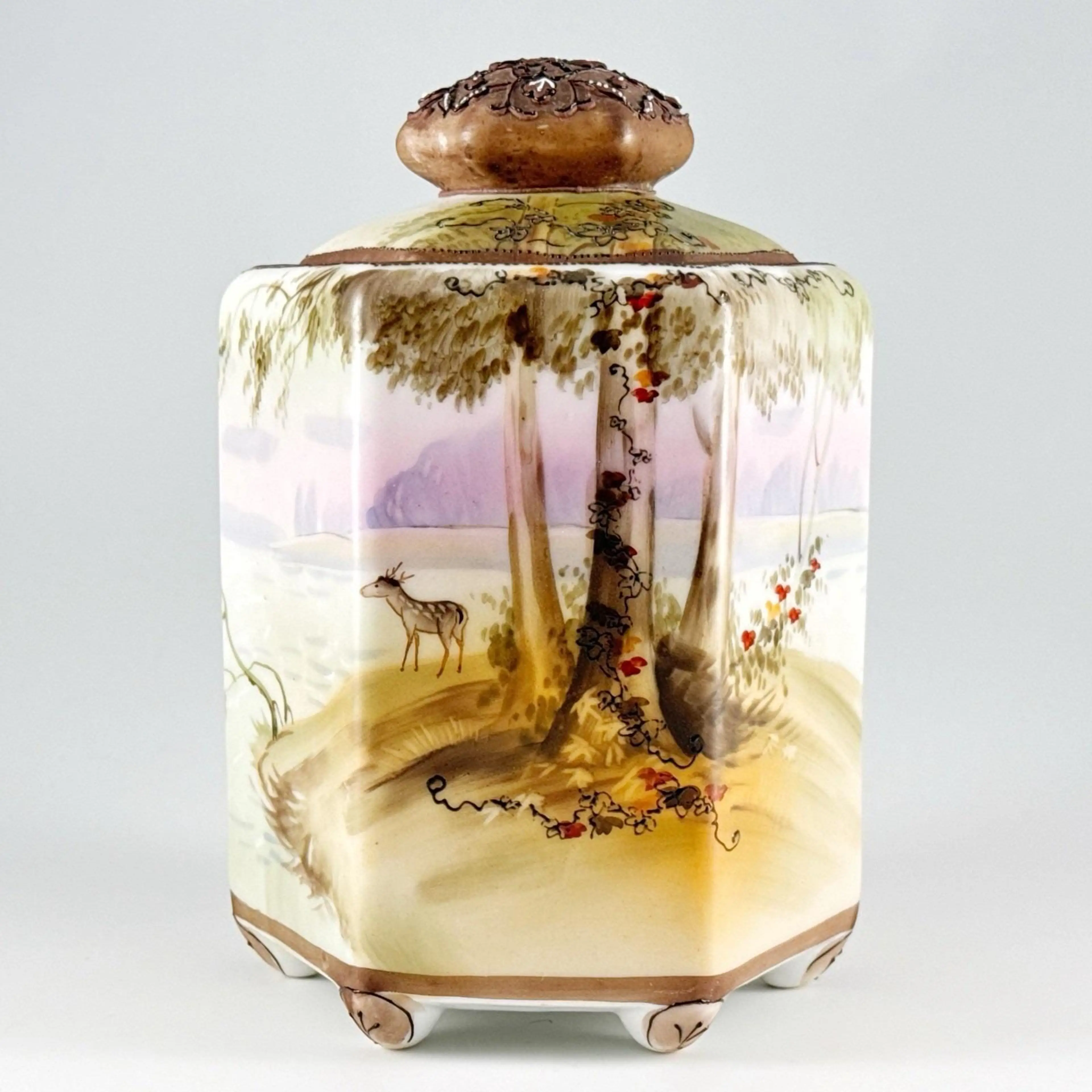
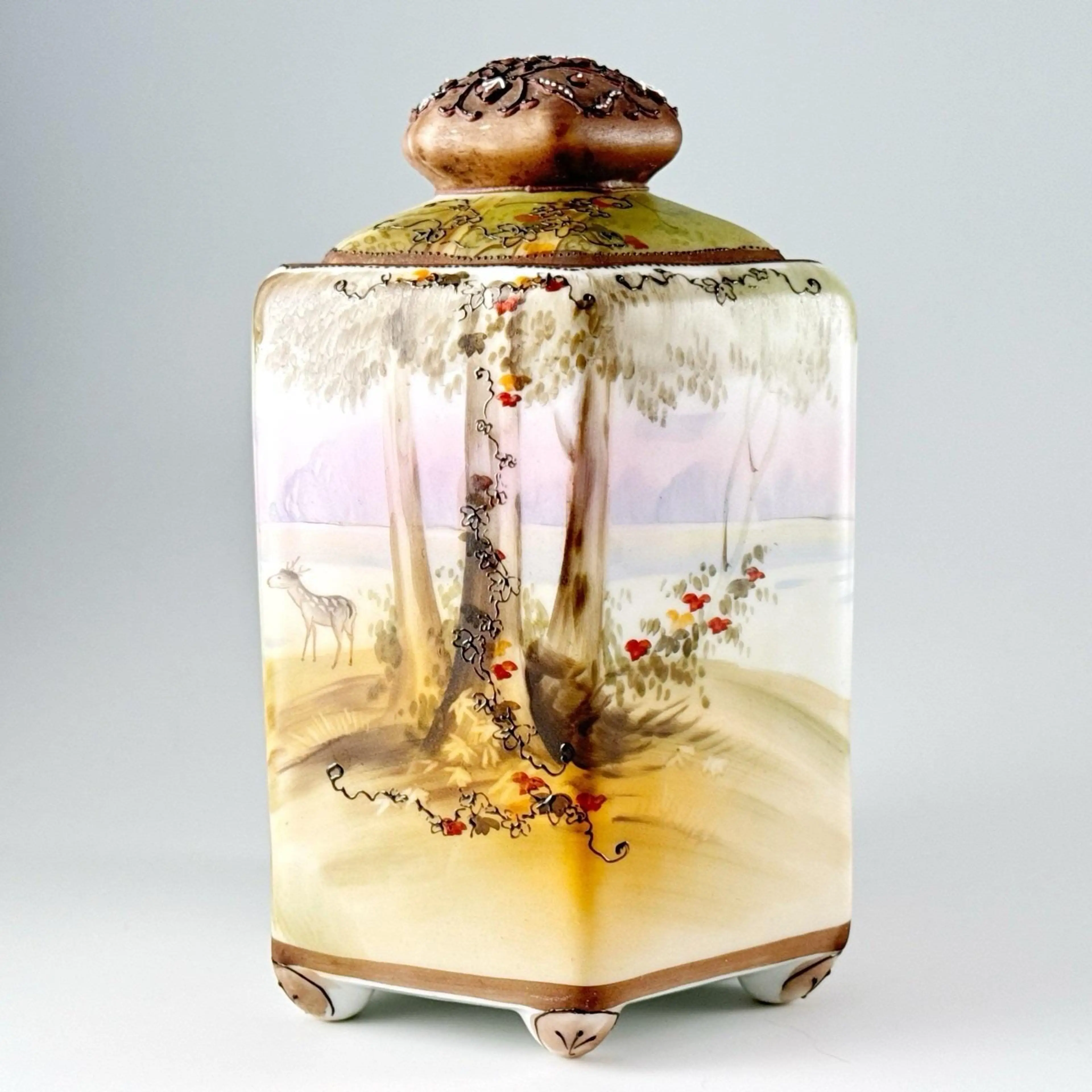
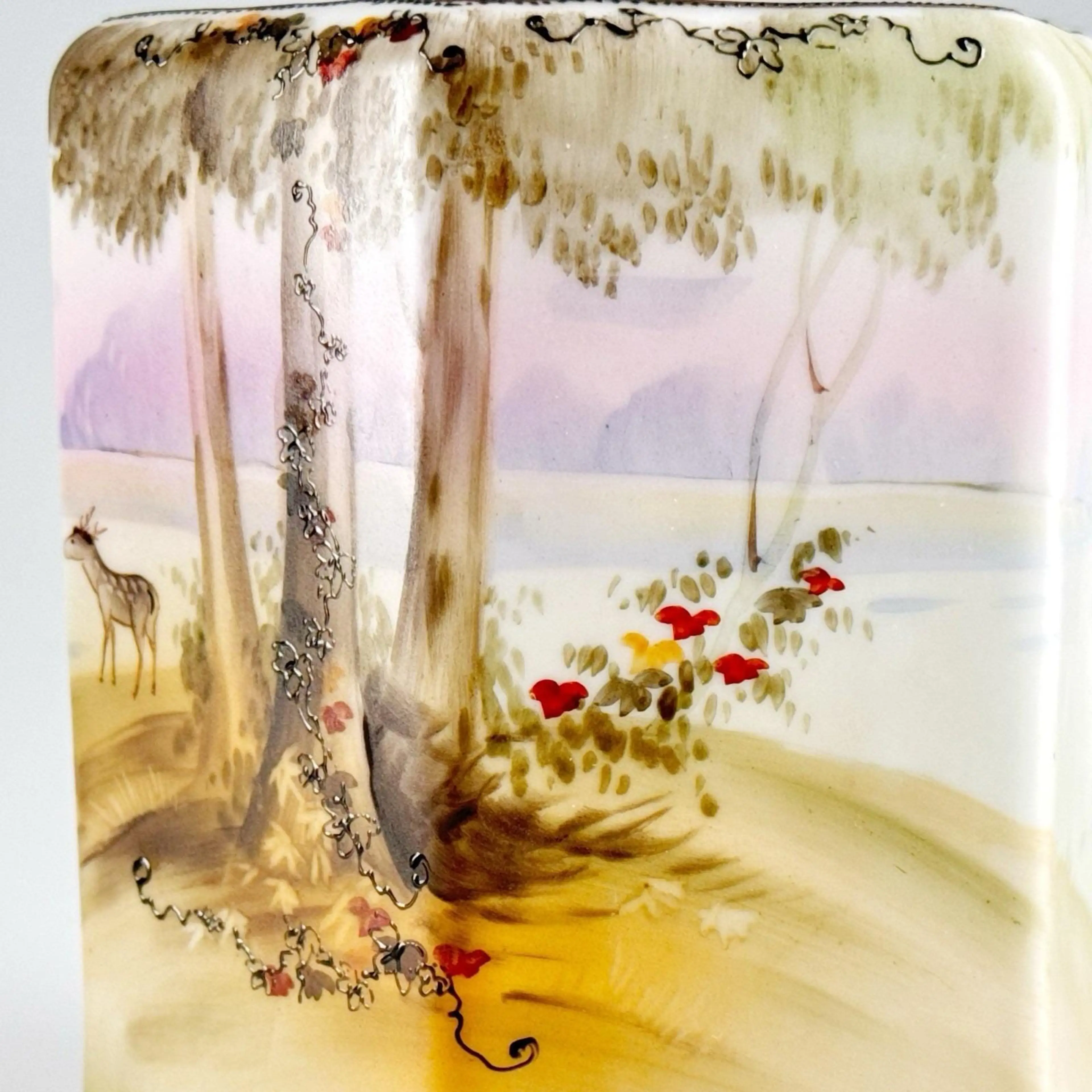
Nippon Morimura Gumi Biscuit Jar Hand Painted Porcelain Deer Landscape Moriage
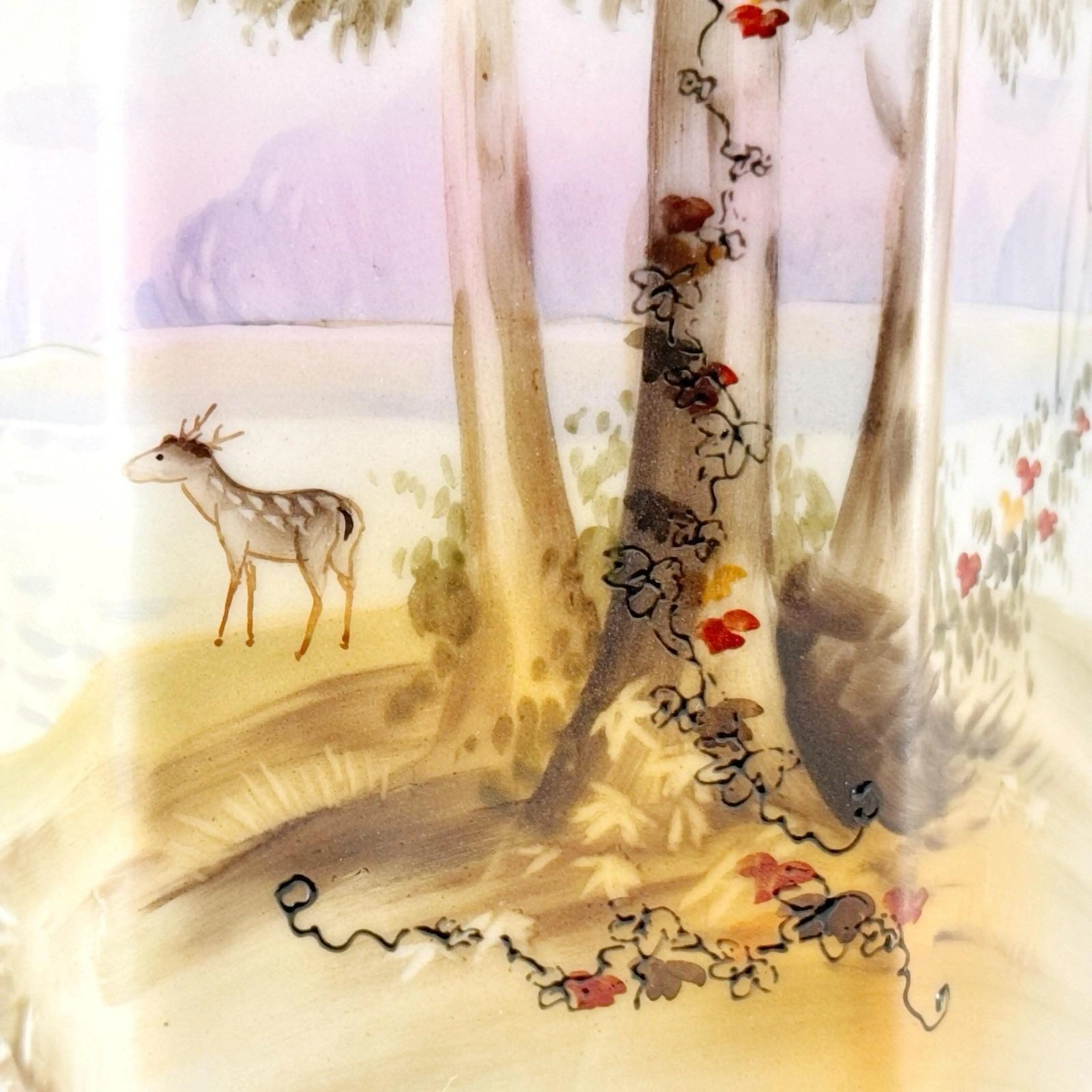
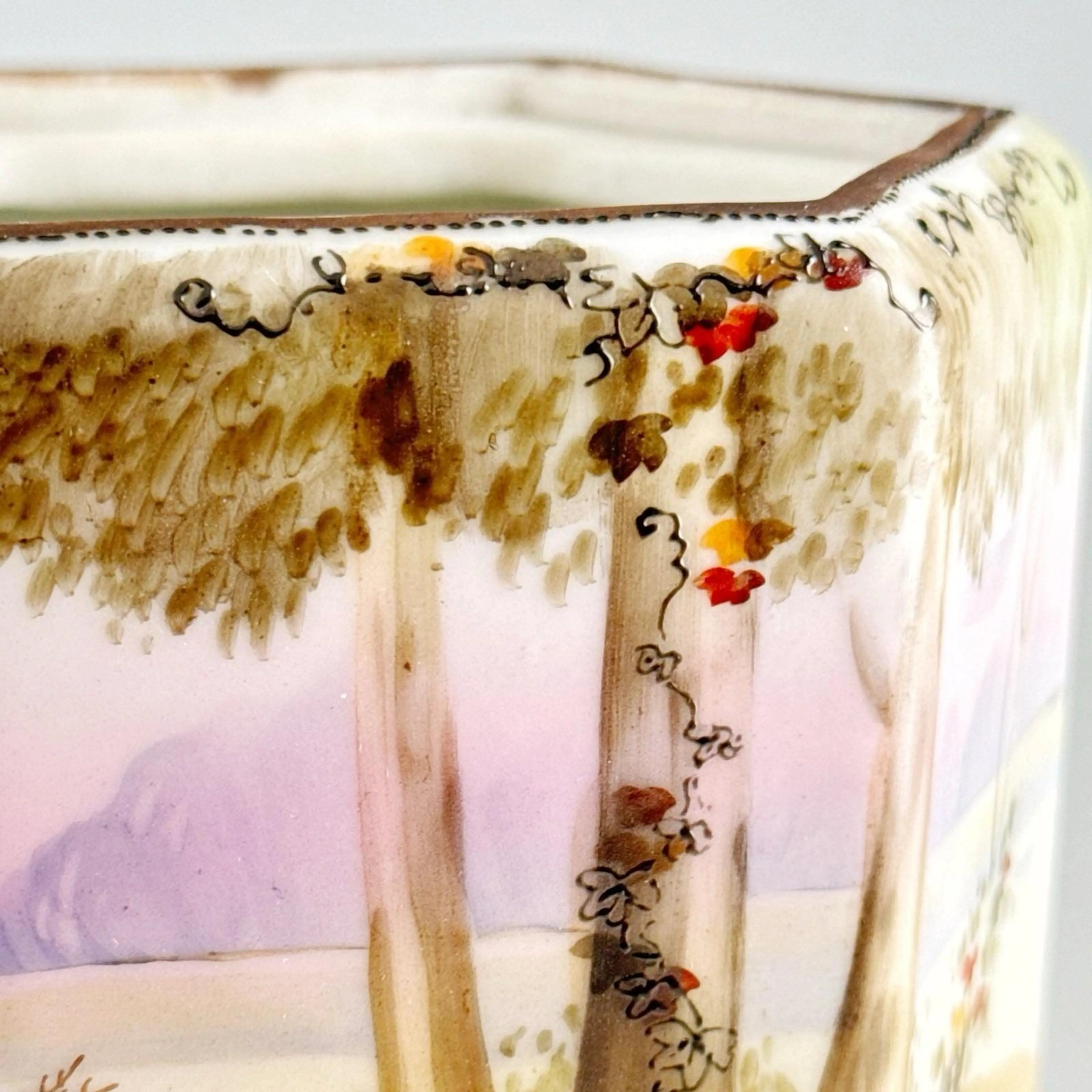
• Nippon Morimura Gumi hand-painted porcelain biscuit jar • Antique 1891-1911 • No issues found: free of chips, cracks & crazing • 4 5/8" L x 4" W x 6 1/2" H • Blue maple leaf mark stamped on bottom • Made in Japan Nippon Morimura Gumi, hexagonal hand-painted porcelain biscuit jar featuring a deer standing on a lush riverbank under trees with blooming flowers! The rims and finial are trimmed in antique gold, and the mouth of the jar and the lid are trimmed in black, moriage dots. An embossed vine climbs the tree to blossom in the canopy, and the finial is heavily decorated in raised, curling floral accents with white, moriage dots. The bottom of the jar sits on six, accented feet. It is in amazing condition with no damage or wear to the paint. A stunning example of Nippon porcelain! Moriage is a decorative technique used in Japanese pottery and porcelain, notably in Nippon and Satsuma wares from the late 19th to early 20th centuries. It involved applying thick slip (watered-down clay) or enamel to the surface, often piped on like cake icing, to create intricate, raised designs such as dots, scrolls, and dragons. Morimura Gumi was a pioneering Japanese trading company established in 1876 by Ichizaemon Morimura to export ceramics and other goods to the U.S. It was a forerunner to the modern Noritake company. The blue maple leaf mark stamped on the bottom (Van Patten's #52) was in use from 1891 until 1911.
- 3 views
- Listed Mar 27, 2026